
Fulton, MO is a mid-sized Callaway County city shaped by older residential streets, institutional properties near Westminster College and the Missouri School for the Deaf, and established neighborhoods with a mature hardwood canopy. Historic lots, trees close to utility lines, and clay-heavy soil create ongoing challenges for tree health and site access. Tree care professionals in Columbia know how to manage dense canopy growth, relieve stress around root systems, and clear storm-damaged limbs so Fulton properties stay safe and accessible for residential and institutional tree care.
That is why so many property owners in Fulton, MO rely on Arbor Tree Care for year-round maintenance.

Prefer to Talk to An Expert?
(573) 310-2120
Why Fulton Property Owners Trust Local Professionals to Get It Right
Crews with local experience understand Fulton’s aging hardwood canopy, dense clay soils, and tight lot access, so each job is planned with the right equipment and methods for the property. That includes work around root intrusion, storm debris, and the fungal pressure that often affects trees across central Missouri.
From expert tree pruning solutions along Westminster Avenue near the college campus to reliable stump removal services on older streets off Court Street, every project is completed with care, accuracy, and long-term property health in mind.
If you take pride in your property, trust local contractors to keep your canopy healthy, your access clear, and your Fulton landscape safer.
Our Tree-Service Services
in Columbia, MO, Include
A Service Area Designed to Fit Your Fulton Neighborhood
Dense tree cover and limited lot access make Fulton properties a poor fit for one-size-fits-all tree care. Local professionals adapt each service to match the layout, trees, and access conditions on every site.
That applies whether the property is a historic home in the Courthouse Square district, a larger institutional campus near the Missouri School for the Deaf, or a newer neighborhood near the US-54 corridor.
From tree trimming and tree disease treatments to root protection and storm damage response, services are planned around the character of each neighborhood and the needs of each property.
Fulton’s Deep-Rooted Urban Canopy, Rooted in History
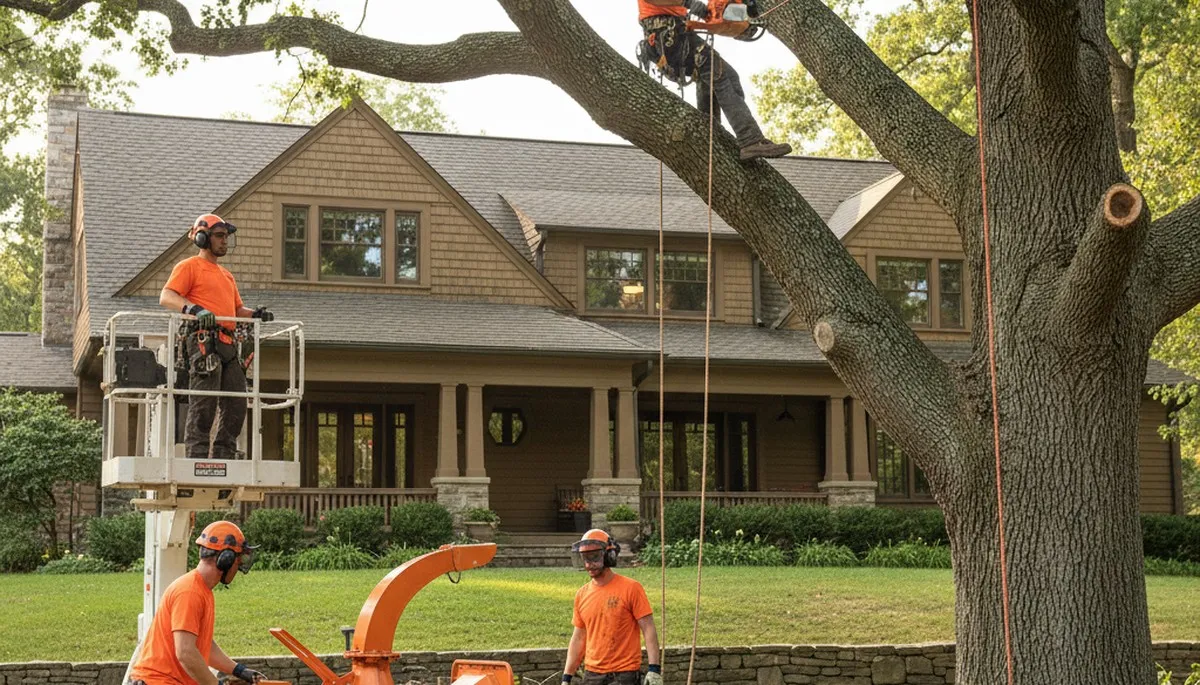
Fulton has grown as a county seat and institutional center for more than 180 years, leaving behind a landscape of established oaks, elms, and maples that are older than many of the buildings around them. That history still shows up today in root conflicts, crowded canopies, and soil conditions that shape how tree care must be handled.
Aging Hardwood Canopy and Structural Risk
Many Fulton properties, especially older homes near Nichols Street and around the downtown Courthouse Square, feature large oak and maple trees that have outgrown routine trimming. When branches become too heavy or unions weaken, the risk of limb failure increases over roofs, driveways, and parked cars.
Local professionals correct those imbalances with targeted crown reduction, selective deadwood removal, and cabling when needed to help reduce damage risk and preserve access.
Clay Soil Compaction and Root System Stress
Fulton’s Missouri clay soils can hold moisture during dry periods, but they also lead to compacted roots and low oxygen levels below the surface. When water sits in heavy clay, root rot and unstable root plates become more likely, especially near older sidewalks and driveways.
Professionals address these conditions with vertical mulching, soil aeration, and targeted tree fertilizing plans that fit the drainage and root-zone limits found on Fulton properties.
Fungal Disease Pressure from Humidity and Canopy Density
Dense canopy growth and Missouri’s humid summers can restrict airflow through tree crowns, creating conditions that favor fungal pathogens and bacterial infections.
Trusted pros respond with tree disease treatments, selective thinning, and insect management programs designed to support tree health and slow the spread of disease across nearby properties.
Severe Storm Events and Wind Damage
Spring and summer storms in central Missouri can bring strong straight-line winds and occasional tornado-adjacent systems that cause broken limbs, uprooted trees, and blocked access across Fulton neighborhoods.
Experienced crews use rapid-response methods, including aerial lifts, ground rigging, and sectional removal, to clear hazards and restore access even when post-storm conditions limit equipment movement.
Narrow Lot Access and Utility Line Conflicts
Older Fulton neighborhoods often have tight side yards and trees growing close to overhead utility lines, which makes large equipment use more difficult without careful planning.
Local pros rely on compact aerial gear and hand-climbing techniques to maintain safe clearance, respect property boundaries, and complete tree work with as little disruption as possible.

Kick off your tree service project today!

Tree Services in Fulton, MO: Care for Every Season
From routine trimming to emergency storm response, local professionals help keep properties safe, healthy, and accessible throughout the year:
Routine Tree Trimming and Pruning in Fulton, MO
- Crown Thinning for Mature Oaks and Maples: Opens up dense canopies to improve airflow and light on established hardwood trees throughout Fulton’s older neighborhoods, helping reduce fungal disease pressure during humid Missouri summers.
- Clearance Trimming Near Westminster College Properties: Keeps limbs from crowding sidewalks, streets, and parking areas near the campus where pedestrian and vehicle clearance matter every day.
- Utility Line Clearance Pruning: Manages tree growth near overhead power and communication lines in Fulton’s established residential corridors to lower outage risk and reduce the need for utility intervention.
- Structural Pruning for Young Trees in New Developments: Shapes branch structure early on trees in newer subdivisions and along the US-54 corridor to reduce future maintenance needs and support healthier growth.
- Seasonal Deadwood Removal: Removes dead and weakening branches before spring storm season to reduce the amount of hazardous debris that can break loose in high winds. Residents in nearby Kingdom City, MO deal with similar deadwood concerns in their own mature tree stands.
Plan trimming ahead of Missouri’s spring storm season to lower hazard risk and keep your Fulton canopy manageable throughout the year.
Tree Removal Services in Fulton, MO
- Hazardous Tree Removal Near Structures: Handles trees with damaged roots, split trunks, or a dangerous lean toward homes, fences, and outbuildings across Fulton residential and institutional properties.
- Storm-Damaged Tree Removal: Removes partially failed or uprooted trees after severe weather to restore safe access to roads, walkways, and driveways throughout Fulton.
- Dead Tree Removal from Utility-Adjacent Lots: Takes down standing dead trees near power lines and communication infrastructure where decay and wind loading raise the chance of contact and outage.
- Large Canopy Removal in Constrained Spaces: Uses sectional dismantling and rigging to remove large oak and maple trees from tight Fulton lots where full-tree felling is not practical.
- Institutional Property Tree Removal: Manages removal work on campus-style properties near Westminster College and the Missouri School for the Deaf, where coordination with facilities staff and pedestrian safety are essential.
Remove hazardous or dead trees before winter ice adds extra weight and increases the chance of uncontrolled failure, structural damage, or blocked access across Fulton.
Stump Grinding and Cleanup in Fulton, MO
- Residential Stump Grinding in Established Yards: Removes leftover stumps from tree removal on older Fulton lots, opening up usable lawn space and eliminating trip hazards near walkways and driveways.
- Root Flare Grinding Near Sidewalks and Driveways: Reduces surface root remnants and stump material that have lifted or cracked pavement along older Fulton streets, helping prevent more damage.
- Multi-Stump Clearing for Landscape Renovation Projects: Prepares properties for landscape redesign by clearing multiple stumps before new landscaping or lawn service work begins.
- Debris Cleanup and Chip Removal: Includes full post-grinding cleanup, with wood chip removal or spreading as needed, so Fulton properties are ready for replanting, sodding, or hardscape installation.
- Stump Treatment for Regrowth Prevention: Applies cut-surface treatments to limit sprouting from active root systems, which is a common issue with fast-regrowing species like silver maple and cottonwood found on Fulton properties. Property owners in New Bloomfield, MO run into similar stump regrowth problems because of the tree species common across central Missouri landscapes.
Stump removal works best before spring growth starts, helping stop root sprouting and allowing new landscaping or lawn restoration to move forward without interference from leftover root activity.
Emergency Tree Services in Fulton, MO
- 24/7 Storm Response for Fallen Trees: Sends crews to Fulton properties after severe weather to clear fallen trees from driveways, structures, and roadways so access can be restored quickly and secondary damage can be reduced.
- Emergency Limb Removal from Rooftops and Vehicles: Removes large limbs that have landed on roofs, vehicles, or other structures, using rigging and sectional cutting to lift weight safely without causing more damage.
- Post-Ice Storm Canopy Assessment and Clearing: Responds after ice-loading events that cause branch failures across Fulton’s mature hardwood canopy, clearing hazards and checking the remaining structure for instability.
- Utility Conflict Emergency Response: Handles trees or large limbs that have fallen into or against overhead utility lines, coordinating with property owners to reduce risk and help shorten outage duration.
- Emergency Root Failure and Lean Assessment: Examines trees that suddenly lean or show root plate heaving after saturated soil events to determine whether removal or stabilization is needed to protect Fulton structures and nearby properties.
Quick emergency response helps limit secondary damage from fallen trees and limbs, protecting Fulton properties from larger structural problems during and after Missouri’s worst weather.